
Wool in Yoga: The Case for Natural Wool Yoga Accessories
7 October 2026 · By PIERRE
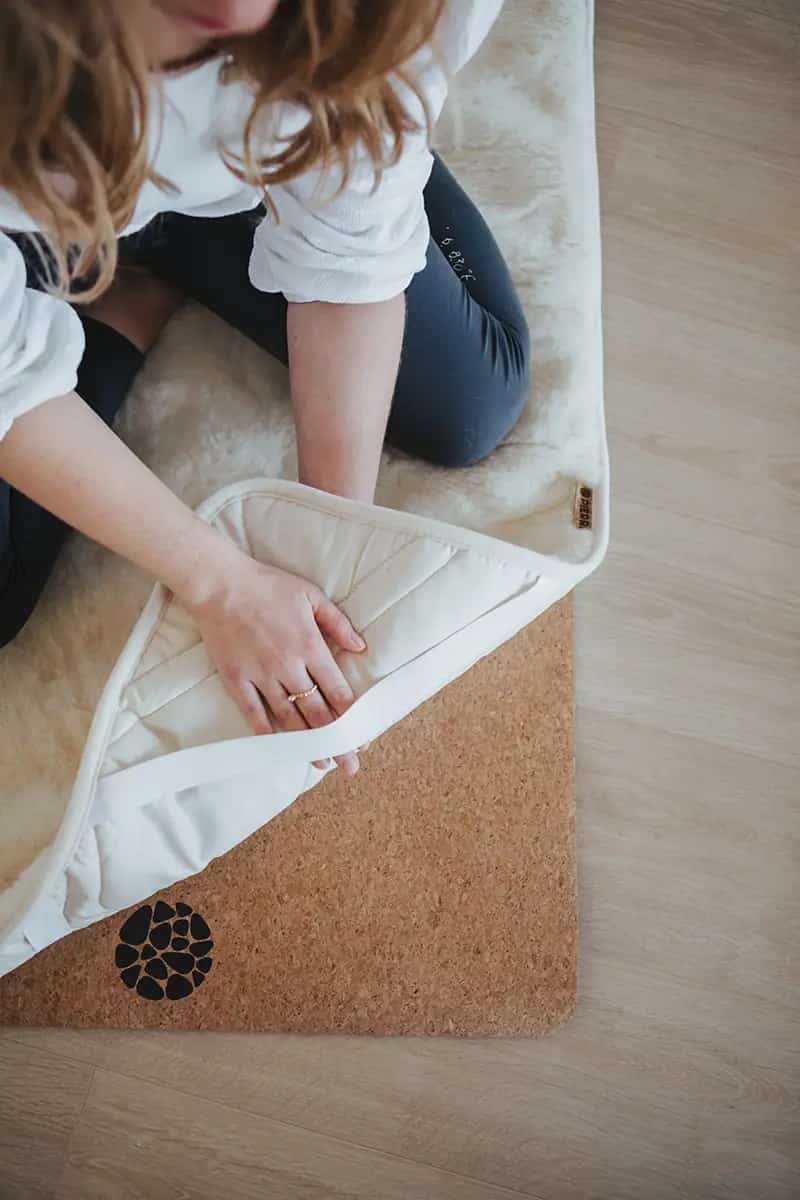
Most yoga gear is designed for movement. Grip for standing poses, cushioning for knees, a surface that wipes clean after a sweaty flow.
But a growing part of many people's practice is not about movement at all. Yin, restorative yoga, yoga nidra and meditation ask you to stay still for long stretches. And in stillness, the material beneath you matters in a very different way.
This is where wool comes in. It is one of the oldest materials people have used for comfort and warmth, and it is quietly finding its way back onto the yoga mat.
Wool as a Yoga Material
For most of history, people practised on whatever natural materials were at hand: woven grass, cotton rugs, animal skins and wool blankets. The sticky synthetic mat only arrived in the late twentieth century, built for the grip that dynamic, standing practice needs.
That grip is still valuable. But as slower styles have grown, many practitioners have noticed that a rubber or PVC surface feels cool and firm when you lie on it for twenty minutes. Wool offers what those mats were never designed to give: warmth, softness and a surface that feels like home.
What Makes Wool So Well Suited to Yoga
Warmth in stillness. Each wool fibre has a natural wave, called crimp, that traps tiny pockets of air. That still air insulates, holding your body heat close during long holds, when the body cools fastest.
Breathability. Wool can absorb a large amount of moisture vapour, roughly a third of its own weight, before it begins to feel damp. It draws warmth and moisture away from the skin and releases it slowly, so you stay comfortable rather than clammy.
Softness. Merino wool comes from Merino sheep, whose fibres are much finer than ordinary wool. Fine fibres bend softly against the skin instead of prickling, which is why Merino feels gentle even under your cheek in savasana.
Freshness. Wool naturally resists odours, so it needs washing far less often than synthetic fabrics. Often, an hour of fresh air is all it needs.
Durability. Wool fibres can bend and recover many thousands of times. Cared for well, a wool accessory keeps its shape and loft for years.
Wool vs Synthetic: How They Compare
Here is how natural wool compares with synthetic materials such as PVC, foam and polyester fleece.
- Warmth when still. Wool holds body heat close. Synthetic often feels cool to lie on.
- Moisture. Wool absorbs and releases vapour. With synthetic, moisture sits on the surface.
- Odour. Wool naturally resists odours. Synthetic can hold smells and needs frequent washing.
- Feel. Wool is soft, warm and textured. Synthetic is smooth, firm or slightly sticky.
- End of life. Wool is a natural fibre that biodegrades. Synthetic is petroleum-based and can shed microplastics.
This does not make synthetic mats wrong. For a strong vinyasa class, a grippy mat is still the right tool. Wool is simply the better companion when the practice slows down.
Wool Yoga Mat Covers and Toppers
A wool mat cover is the easiest way to bring wool into your practice. Rather than replacing your mat, it lays over it. You keep the stability of the mat underneath and gain a warm, soft surface on top.
The PIERRE Wool Yoga Mat Cover is made from thick European Merino wool and cotton. It measures 183 × 65 cm and fits over a standard mat with four elastic bands. We chose not to add a rubber backing, which keeps it light to carry, easy to fold away and simple to wash. For taller yogis or extra-long mats, the XL Wool Yoga Mat Cover measures 205 × 68 cm.
It is ideal for wool yin yoga sessions, yoga nidra, meditation and the long savasana at the end of any class. It is not designed for dynamic standing work, so roll it back or set it aside when your practice picks up pace.
Wool for Restorative Practice
In restorative yoga, wool works at every point of contact. A wool cover beneath you keeps the floor's chill away. A wool blanket over you holds warmth through long holds. And a wool-covered bolster offers warm, gentle support under the spine or knees.
Our Merino Wool Yoga Bolster pairs a soft Merino outer with a natural kapok filling. It is made in Bulgaria, measures 63 × 27 × 15 cm, and is part of a limited edition. For a guide to using a bolster alongside blocks, blankets and an eye pillow, read The Best Yoga Props for Restorative Yoga.
Caring for Wool So It Lasts
Wool asks for a lighter touch than synthetic gear, and it rewards you with years of use.
- Air it first. Hang your cover outside for an hour. Wool refreshes itself remarkably well, and this is often all it needs.
- Wash only when necessary. Use your machine's wool programme at 30°C with a small amount of wool detergent. Wash it with other wool items.
- Be gentle with the spin. Skip fabric softener and keep the spin at 600 rpm or lower.
- Always air-dry. Lay it flat or drape it over a rail. Never tumble-dry, as heat can shrink wool permanently.
For care tips on cork and recycled mats as well, see our natural materials guide to cleaning your yoga mat.
The PIERRE Wool Range
Every piece in our wool range is made in Europe from natural materials, chosen for comfort first and built to last.
- Wool Yoga Mat Cover: Merino wool and cotton, 183 × 65 cm
- XL Wool Yoga Mat Cover: the extra-long version, 205 × 68 cm
- Merino Wool Yoga Bolster: Merino outer, kapok filling, limited edition
- Restorative Yin Yoga Set: wool cover, kapok bolster and lavender eye pillow together
- XL Yoga Set: the Lion XL cork mat with the XL wool cover
Cork and wool make a natural pair. Cork gives you a stable, grippy base, and wool adds warmth on top. You can read more about both in Natural Materials in Yoga: Cork, Wool & Linen.
Frequently Asked Questions
Can you do yoga on a wool mat?
Yes, and for slow practices it is one of the most comfortable surfaces there is. A wool cover suits yin, restorative yoga, yoga nidra and meditation. For dynamic standing poses, a cork or rubber mat gives the grip you need.
Is Merino wool itchy?
Merino fibres are much finer than ordinary wool, so they bend softly against the skin instead of prickling. Most people find Merino comfortable even on bare skin. If you have a known wool allergy, check with your doctor first.
How do you wash a wool yoga mat cover?
Air it outside first, as this is often enough. When it does need a wash, use a 30°C wool programme with wool detergent, keep the spin at 600 rpm or lower, and always air-dry it. Never tumble-dry.
Does a wool cover replace my yoga mat?
No. It lays over your existing mat and attaches with elastic bands. The mat underneath gives stability, and the wool on top gives warmth and softness.
Why is wool good for yin yoga?
Yin poses are held for three to five minutes or more, and the body cools during long holds. Wool keeps warmth close to the body, and a warm body finds it easier to soften and release.
Warmth Worth Keeping
Wool is not a trend. It is one of the oldest comforts we have, and it suits the slower, quieter side of yoga beautifully. As the evenings draw in, explore our wool yoga mat covers and the rest of the range in the shop. Made to comfort you. Made to last.
Continue Reading
7 October 2026
The Best Yoga Props for Restorative Yoga
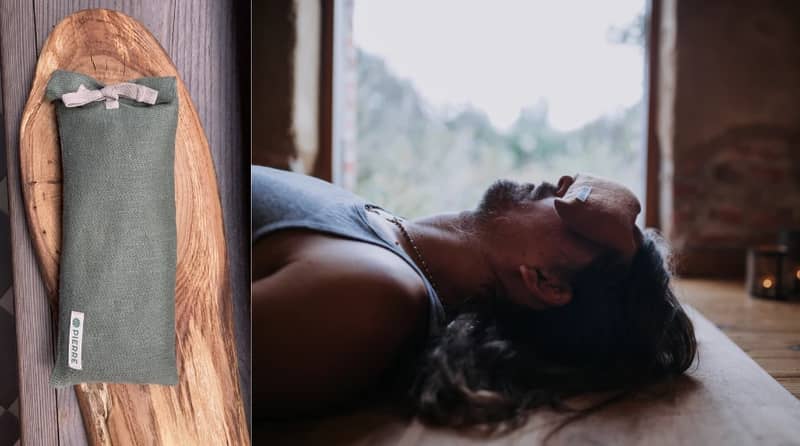
Restorative yoga is only as restful as the support beneath you. A guide to the bolsters, cushions, blankets, eye pillows and blocks that let the body truly let go.
21 September 2026
Your Practice Brought You Here. Your Words Might Bring Someone Else.
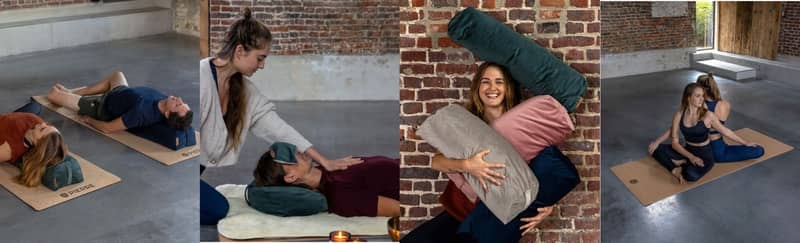
Pierre Sports grows through honest words, not advertising. Here is why your experience matters and how sharing it can bring others to the practice.
21 September 2026
A New Site. A New Chapter. Same Roots.
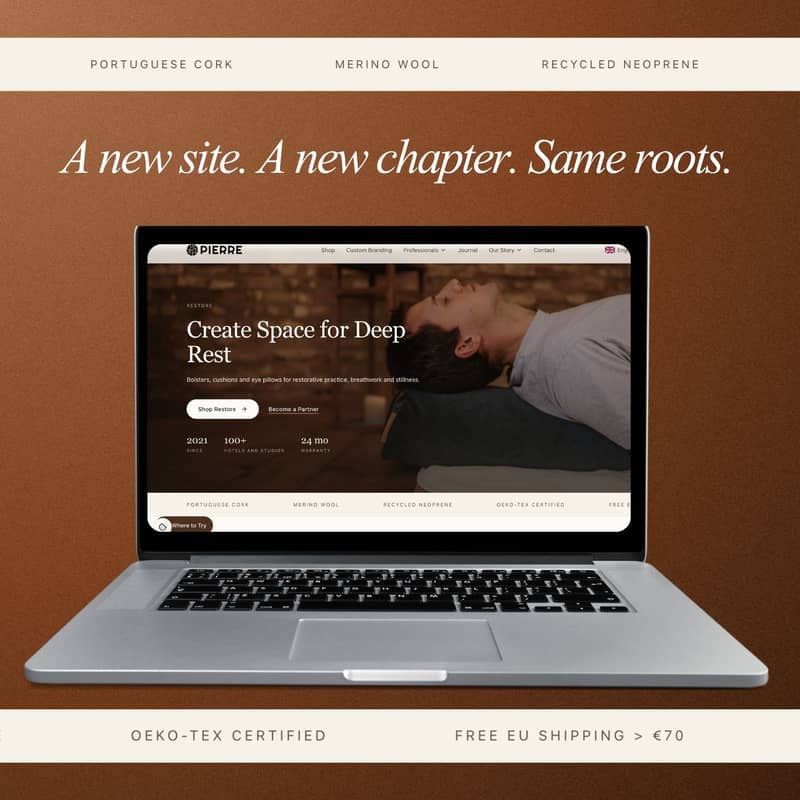
The Pierre Sports website has been redesigned from the ground up. A cleaner experience, a clearer story — and 10% off to celebrate.